
Schmidhuber, Supan and a series of real-world examples brought the discussion back to what delivers results, showing how audiences respond when communication hits the right moment, context and channel.
The final day of DK Festival quickly stripped away the difference between what sounds good and what genuinely stands behind it, most clearly reflected in the session by Jürgen Schmidhuber, who marked the closing day of the creativity and communications festival. Schmidhuber is considered the father of modern artificial intelligence and a scientist whose work has for decades been embedded in the systems that today shape the way information is created, distributed and interpreted.
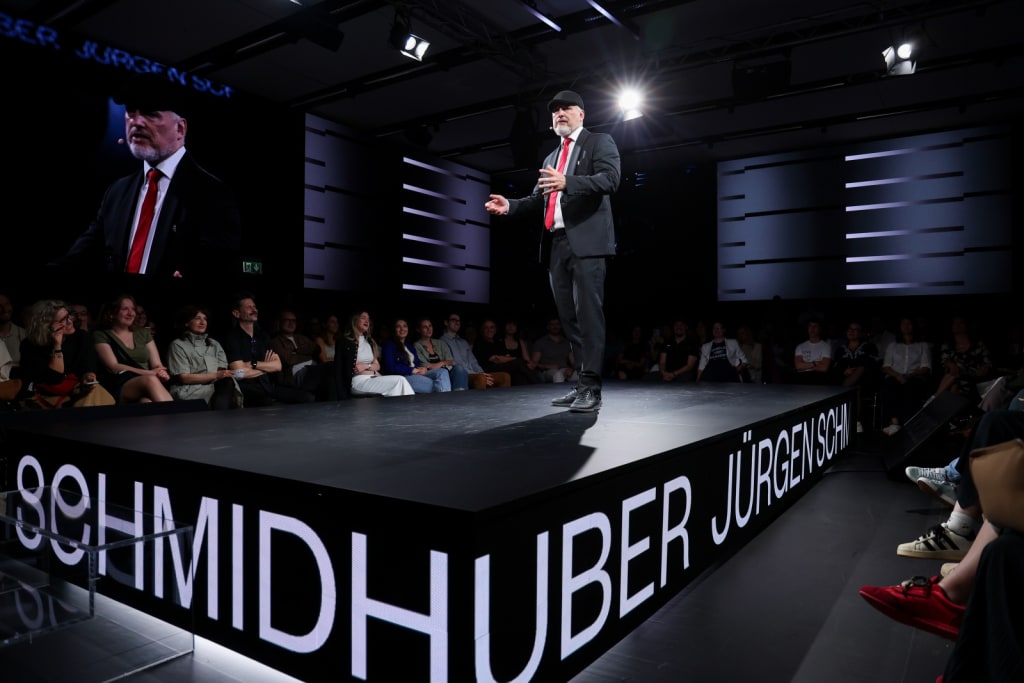
Foto: Matija Habljak/PIXSELL
In his session Modern AI and the Future of the Universe delivered before a packed main hall, he did not focus on projections that merely sound impressive, but on the difference between what artificial intelligence actually is and what is attributed to it. He spoke about the long-term development of learning systems but also about the limitations that are often overlooked in public discourse and the direction research is taking once short-term market expectations are removed from the equation. Such a perspective shifted the discussion beyond the usual frameworks and brought it back to the level of understanding – what the technology truly does and what we choose to see in it.
According to Schmidhuber, today’s most effective AI systems still operate “behind screens.” There are still no AI-powered robots capable of doing what skilled human workers can do with their hands. Human hands are highly advanced tools with millions of sensory capabilities that machines still cannot match, he said.

Foto: Matija Habljak/PIXSELL
If that part of the program separated what systems do from what is projected onto them, the next session showed what people do with those systems when they need to make decisions that last. That is where Julie Supan entered the stage, the elite brand strategist behind the early positioning of YouTube and someone who helped shape brands such as Airbnb, Dropbox, Reddit and Discord at the moments when they were still defining what they actually were.
Her session was not aimed at inspiration, but at structure – what it looks like when a brand has a clearly defined role, what it means to make decisions that continue to make sense even when circumstances change and why most communication problems stem not from a lack of ideas, but from a lack of clarity. Through concrete examples, she demonstrated how meaning is built in a way that can withstand growth, competition and shifts in channels without the need to repeatedly redefine what a brand stands for.
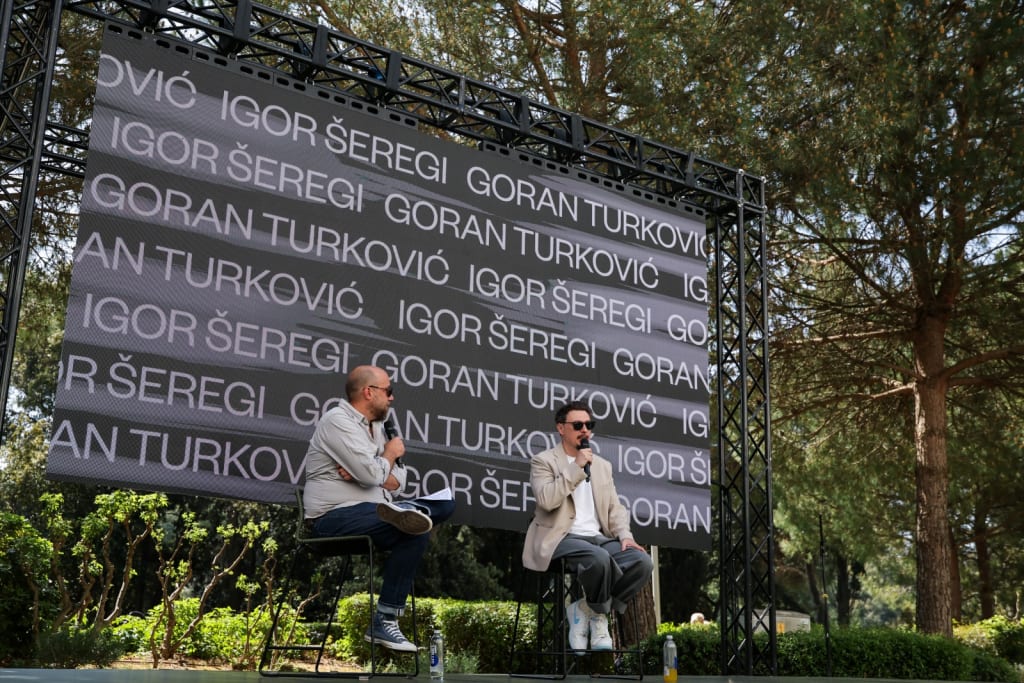
Foto: Emica Elvedji/PIXSELL
WHEN CONTENT OUTGROWS ITS OWN CONTEXT
The project The Wedding That Beat Titanic: 2 Million Reasons to Talk About Svadba was presented by Igor Šeregi, director of the film Svadba and Goran Turković (designer at Šesnić&Turković and member of HURA and IAB Croatia) through concrete figures and decisions that led the film to surpass even Titanic as the most-watched title in several countries across the region. Through the development of the idea, creative risks and key decisions, they demonstrated how a story rooted in a local context can reach millions and become something audiences not only watch, but also share, discuss and return to.

Foto: Matija Habljak/PIXSELL
TRUST IN SYSTEMS WE DO NOT UNDERSTAND
As artificial intelligence becomes increasingly present in everyday communication, it is becoming more evident that the problem often lies not in the technology itself, but in the way we work with it. During The Psychology of AI, Boris Šurija, CEO of Lexi and member of IAB Croatia, and Andrijana Mušura Gabor, psychologist and behavioural scientist, demonstrated how patterns such as anchoring, confirmation bias and the need for “safe” answers regularly appear in AI output, explaining why so much generated content sounds predictable. Through practical examples, they explained how changing the way a task is assigned to a model directly affects the quality of the results and why the difference between average and truly useful output often depends entirely on the person using it.

Foto: Emica Elvedji/PIXSELL
RADIO THAT DOES NOT DEMAND ATTENTION BUT HAS IT
While most media compete for visibility, there are also those that operate differently – more quietly, but with longer-lasting impact. The discussion Did Video Really Kill the Radio Star?, organised by Radio Grupa and Radio Istra, featured Boris Jokić, scientist and host of the show Glazbeni kurikulum on Yammat FM and Korado Korlević, educator, astronomer and long-time voice of the programme Znanstveni leksikon – Pod zvijezdama on Radio Istra, moderated by journalist and radio host Damir Jurjević. Through the conversation, they demonstrated how radio remains deeply embedded in the everyday lives of audiences, their habits, routines and local communities and why audio still holds a unique role that other channels cannot fully replace, even in an environment dominated by visuals.
The final day did not close the questions, but sharpened them. After everything that was seen and said, a clear distinction remains between communication that merely appears convincing and communication that truly changes behaviour.
More information about the festival is available at www.danikomunikacija.com.