
Pitching, ESG, science, advertising to children, and the role of culture — this year’s panels don’t circle around the issues. They go straight at the ones shaping the future of the industry: responsibility, trust and long-term relevance.
Yes, the industry has guidelines. But let’s be honest, standards aren’t built on paper. They’re built in decisions, in relationships, in the everyday ways we choose to work. From pitching practices to client dynamics, from sustainability messaging to communicating science and sensitive societal topics — the pressure is on for clearer positions, stronger accountability and actual consistency. That’s exactly where DK panels step in.
From May 7–10, 2026, in Rovinj, these conversations move from theory to practice — opening up how standards are really set, how trust is earned (or lost) and what long-term value in communication actually means.

THE WAY WE PITCH SHAPES THE KIND OF INDUSTRY WE BUILD
Pitching isn’t just a process. It’s a signal of what kind of industry we’re choosing to build. As expectations rise, so does the need for clearer rules, fairer relationships, and more sustainable ways of working between agencies and clients. Can pitching move from burnout to actual collaboration?
HURA and its Pitch Taskforce have been listening closely to the market, mapping real-life scenarios and translating experience into action. In this session, Marina Bolanča (CEO, Abeceda komunikacije, Member of HURA and IAB Croatia), Luka Duboković (CEO, Board President, BBDO, Member of HURA and IAB Croatia) and Dragana Josipović (CEO, Futura DDB Zagreb, Member of HURA and IAB Croatia) introduce the updated HURA Pitching Guidelines and open a conversation around elevating standards, strengthening transparency and encouraging sustainable collaboration between agencies and clients.

ESG PARADOX: GREENHUSHING AS THE NEW GREENWASHING?
ESG used to be a communications advantage. Now it’s starting to look like a risk. More companies are doing the work — but saying less about it. Why? Because talking about sustainability increasingly comes with reputational landmines. So where’s the line between responsible transparency and strategic silence?
This discussion brings together leaders from communications, business and sustainability — Ivana Galić (Director of Marketing, PR and Corporate Communications, NovaTV), Vinko Filipić (Founder, Greencajt, RED agencija, Member of HURA and IAB Croatia), Marija Franić (Head of Corporate Affairs, Kaufland Hrvatska) and Vlatka Kamenić Jagodić (Marketing and Corporate Communications Director, KONČAR Group) — to explore whether ESG is becoming too risky to communicate, should brands hide their sustainability efforts and what credible ESG communication actually looks like in 2026.

SUGAR, SPICE & EVERYTHING KIDS SEE: THE REALITY OF FOOD MARKETING AROUND CHILDREN BY UNICEF
Kids don’t opt in. They’re exposed — early, constantly and often before the day even properly starts. The line between content and advertising is increasingly blurred and a significant share of those messages promote products high in sugar, salt, and fat.
So what does that do to how children understand food — and brands?
Drawing on new research by the Croatian Institute for Public Health on children’s exposure to advertising around schools, this panel brings together Lidija Gamulin (Head of Partnerships, UNICEF), Maja Lang Morović, phD (Head of Health Promotion in the Communities Department, Health Promotion Division, Croatian Institute of Public Health), Maja Baumschabel (Head of Operations, HURA & IAB Croatia), Una Zima (CEO, Spotstudio & Producer, Croatia film, Member of HURA & IAB Croatia) and Tatjana Katkić Stanić (Ombudsperson for Children) to unpack what the data really shows: where exposure happens, how frequent it is and which ads dominate.

SCIENCE SELLS FACTS, BUT WHO’S BUYING? BY RUĐER BOŠKOVIĆ INSTITUTE
Facts don’t automatically travel. Without context, format, and an understanding of how people process information, even the most accurate data can go unnoticed — or worse, misunderstood. So how do you communicate complexity without dumbing it down or turning it into clickbait?
From how people process difficult information to why misinformation travels faster than nuance, our panelists Antonella Barišić Kulaš (Researcher, Faculty of Electrical Engineering and Computing (FER), University of Zagreb), Anđela Buljan Šiber (Owner, Izone.agency, Scientific Enthusiast, Member of HURA and IAB Croatia), Petra Buljević Zdjelarević (Head of PR and Communications, Ruđer Bošković Institute), Zvonimir Galić, PhD (Professor, Department of Psychology, Faculty of Humanities and Social Sciences, University of Zagreb) and dr.sc. Marko Košiček (Coordinator of science popularization and science communication projects, Ruđer Bošković Institute) will show how communicators can help researchers become clear, credible public voices.
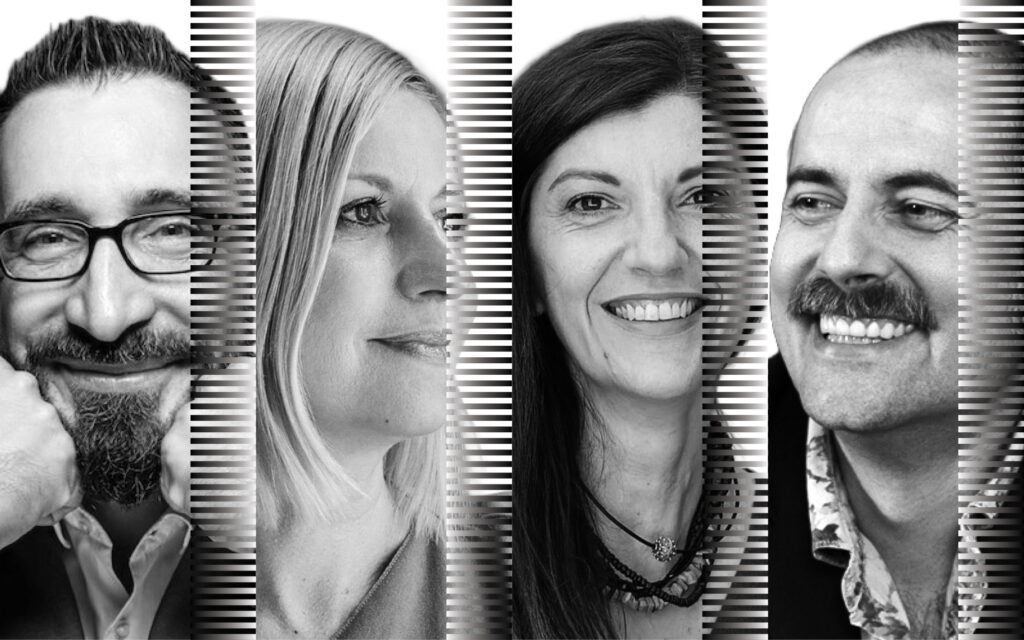
GET UNDISTRACTED BY CULTURE BY CROATIAN MUSIC INSTITUTE
Most communication fights for attention in seconds. Culture doesn’t. It operates in a space where people choose to engage — which makes it one of the last environments where attention, trust and emotional connection still carry weight. But can culture become a meaningful communication channel without losing what makes it… culture?
In a conversation moderated by Boris Trupčević (Business Director, Croatian Music Institute), Gorana Barišić Bačelić (Director, Tvrđava kulture Šibenik), Tatjana Rajković (Founder and Consumer Insights professional, Kabinet 3C & Praktikum) and Karlo Stojčević (Partner, Tvoj Domagoj) will explore how cultural spaces can function as contemporary communication channels without losing authenticity and whether collaboration models exist that deliver real reputational value and long-term impact.
Across these panels, DK makes one thing clear: the industry doesn’t evolve through declarations—it evolves through choices. The focus is on the decisions that shape how we work, how we communicate, and what kind of impact we leave behind.
Featured image: Borna Jakšić/PIXSELL